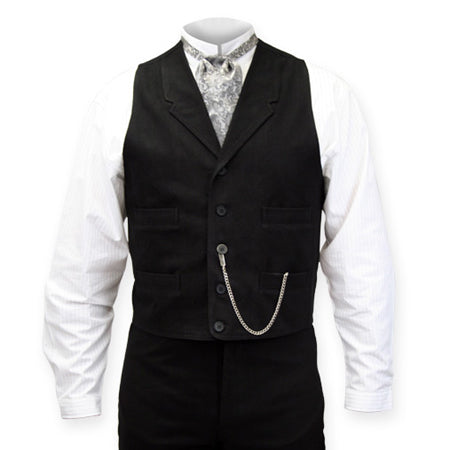
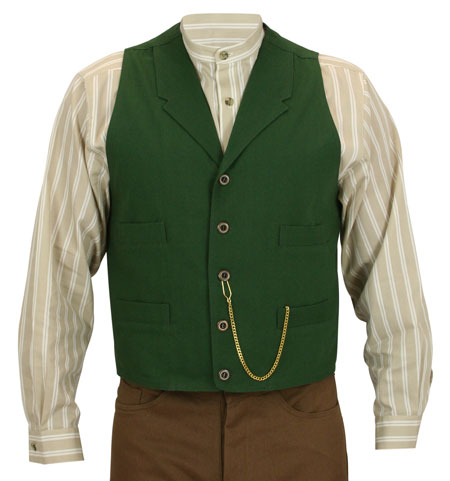
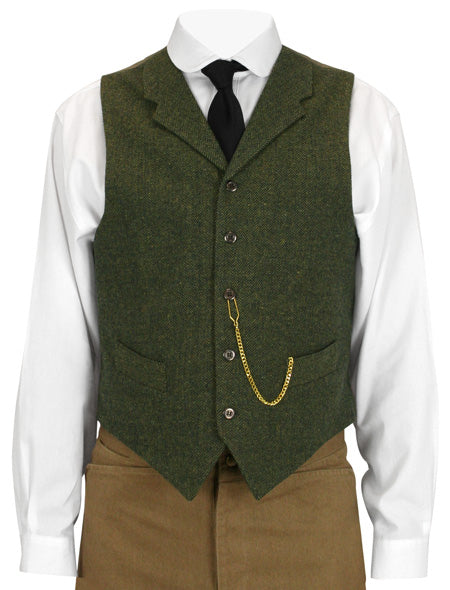
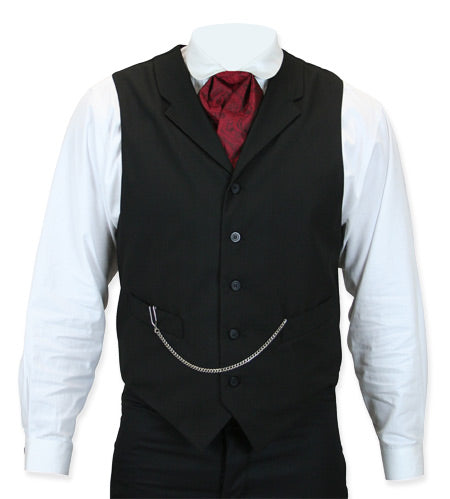
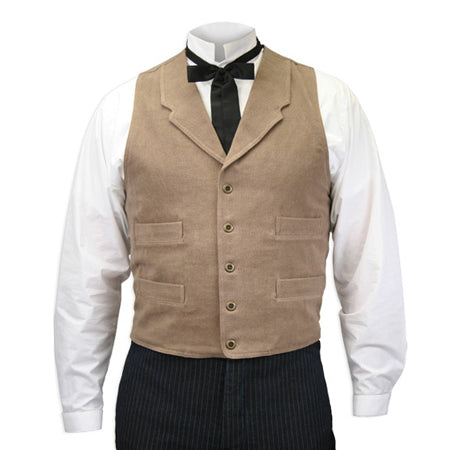
Historical Men's Vests

More than just the second layer of a suit, the vest signals the intrinsic fashion sense and finesse of the wearer. The Vest (or waistcoat) was de rigueur in any gentleman's wardrobe. No self-respecting chap would dare be caught without a waistcoat covering his dress shirt; it would be like venturing outside in underwear!

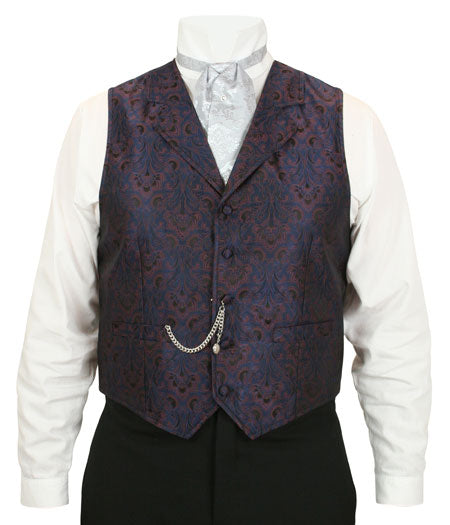
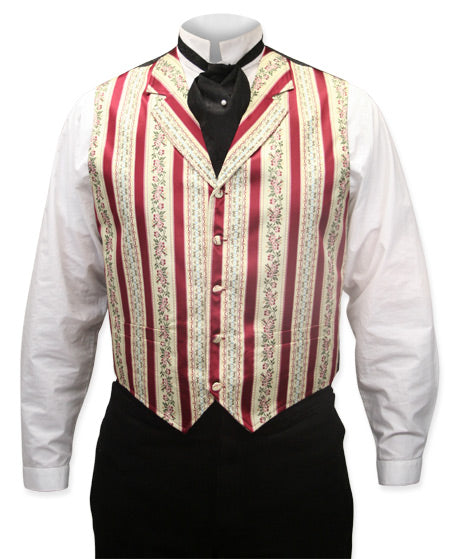
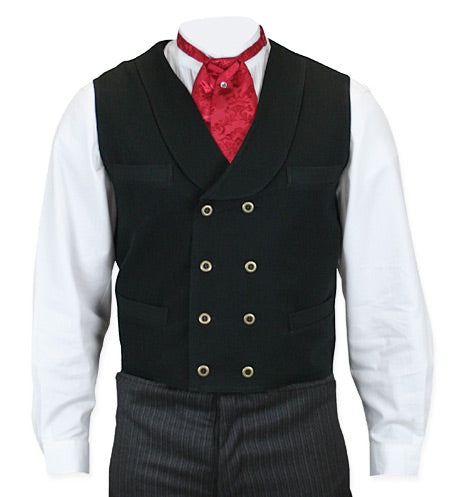
Just as in days gone by, an old fashion vest worn today should be suited to the occasion. A fancy silk, satin or velvet vest is ideal for more formal affairs such as a wedding, gala, or ball. These fancy vests often have an elegant shawl collar with patterns ranging from subtle tone on tone stripes or paisleys to more outlandish combinations to catch the ladies' eyes. They often have antiqued metal or fabric covered buttons.

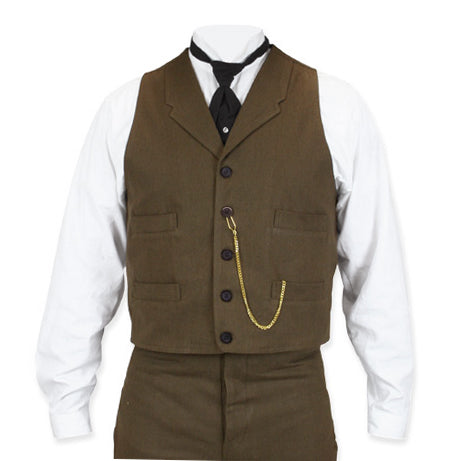
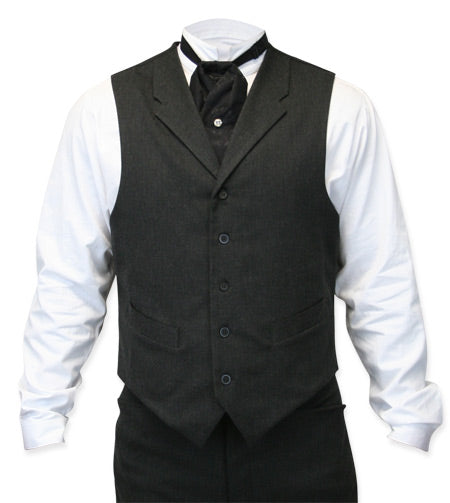
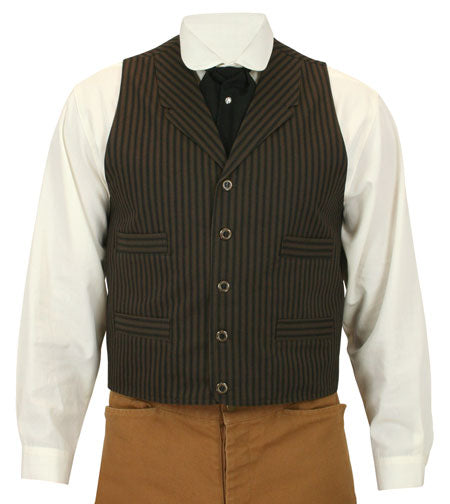
For a professional gentleman a more tightly buttoned old fashioned vest woven from wool in tweed, houndstooth or plaid design will be excellent.

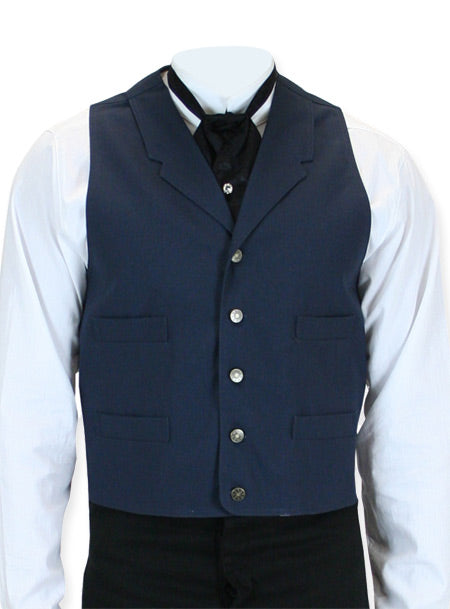
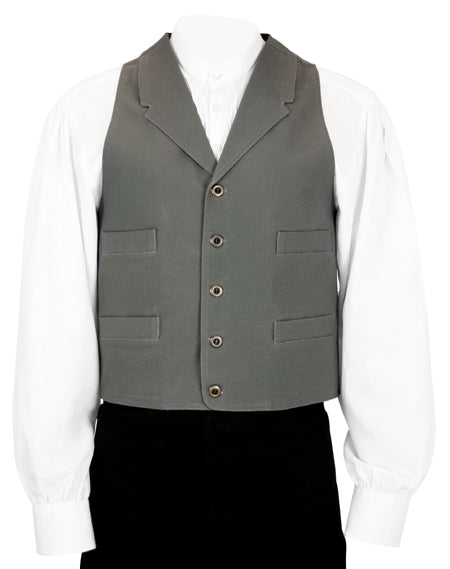
For a working man, a durable work vest is required. Ours are made of a rugged canvas, heavy cotton or leather and will last for many wearings.

For gentlemen of slim build a double breasted vest with two rows of buttons on the front can add to his stature. Single breasted vests will be more slimming for most gentlemen. Vests can have notch or shawl collar designs in any of the fabrics to suit your style or need.

We are proud of our full line of mens vests, and think you will be delighted in the quality and authenticity of our line. If you have any questions or need further assistance, please contact us and we will be happy to assist you.

Historical Men's Vests
Filter

Filter

207 products

Availability
Product type
Color
  • Black (39 products)
  • White (8 products)
  • Beige (27 products)
  • Brown (39 products)
  • Red (33 products)
  • Blue (11 products)
  • Navy (13 products)
  • Gray (29 products)
  • Green (10 products)
  • Pink (1 products)
  • Purple (3 products)
  • Yellow (1 products)
  • Multicolor (61 products)
  • Gold (3 products)
  • Silver (6 products)
Size
Materials
Pattern
Price

The highest price is $251.95

$
$
Decade
Care instructions

Q&A About Historical Men's Vests

A man can wear a historical vest both traditionally and in modern outfits. For historical accuracy, keep it buttoned (except maybe the bottom button), wear it high enough to cover your waistband, and pair with a period shirt. For today's style, 19th century vests look great with jeans and a nice button-up shirt for work or a night out. This blend of old and new creates a unique look that's distinctive without being costume-like, offering both style and the practical benefits vests have always provided.

Men stopped wearing vests as everyday attire largely due to changing fashion trends. The shift toward less formal business attire in the 20th century, combined with the practicality of new garment options like sweaters and sportswear, diminished the vest's former prominence in men's wardrobes.

Vests are experiencing a renaissance as both fashion statement and functional garment for men interested in historical styles. While no longer standard daily wear, period-authentic vests have developed a dedicated following among Old West enthusiasts, reenactors, steampunk aficionados, and those appreciating the distinctive craftsmanship of 19th century menswear.

The size vest you should buy depends on your chest and waist measurements, with the larger of these two determining your vest size. Measure both your chest at its fullest point and your waist at your belly button, then select a vest size based on whichever measurement is largest to ensure a comfortable fit that closes properly without pulling.

To measure for a vest, wrap a measuring tape around the fullest part of your chest and also around your waist at your belly button, keeping the tape parallel to the floor. Wear the same weight shirt you'll typically wear with the vest and use the larger of these two measurements to determine your vest size.

The most common alternative name for a vest is "waistcoat" (pronounced "wes-cut" in British English), which was the standard term used throughout the 19th century. In some regions and contexts, vests might also be called "weskit," "gilet" (in French-influenced areas), or "bodice" (though this term was more commonly used for women's garments). In historical menswear, "vest" and "waistcoat" are generally used interchangeably, with "waistcoat" being the more historically authentic term in British and formal contexts.

Men seeking authentic 19th century formal attire absolutely wear vests with suits, as the waistcoat was an essential component of proper gentlemen's dress during this era. For historical correctness, a period suit is incomplete without its matching or complementary vest, which provides both the authentic silhouette and practical features that defined men's fashion from the Regency through Victorian periods.

The point of wearing a historical vest is threefold: achieving period-authentic appearance, gaining practical benefits like warmth and storage, and experiencing the distinctive style of 19th century menswear. Vests served both functional and social purposes during the 1800s, providing warmth, protecting shirts from soil, offering convenient storage, and signaling a man's occupation and social standing.

A man can absolutely wear a vest without a jacket, as this was common practice for working men throughout the 19th century. While formal occasions might have required complete suits, everyday work situations often featured men in shirts and vests only, particularly in warmer weather or during labor.

Men should wear vests if they appreciate the garment's historical significance, desire the distinctive look of period attire, or need the practical benefits of core warmth and pocket storage. Vests add a distinguished layer to historical fashion, create a more polished appearance, and offer authenticity for reenactments or Old West enthusiasts.

Men can wear historical vests with denim trousers for an authentic Old West look, as denim work pants were common among laborers, miners, and cowboys during the late 19th century. While not historically accurate for formal or middle-class urban settings, the combination of a period vest with sturdy denim creates an authentic working-class appearance reminiscent of frontier America.

The main types of men's vests are single breasted and double breasted. Other distinguishing characteristics include the collar and lapel style (shawl, notch, stand, or none), fabric composition (silk, wool, linen, cotton), and intended use (work, dress, or formal). Each variation served different purposes and social contexts throughout the 19th century.

During the 1800s, men across all social classes wore vests, from laborers and tradesmen to businessmen and aristocrats. Working men wore sturdy, practical vests for daily labor, middle-class professionals donned more refined waistcoats for business, and upper-class gentlemen displayed elaborate, fashionable vests for social occasions, with the garment serving as both functional necessity and social indicator throughout the century.

Your Recently Viewed Items