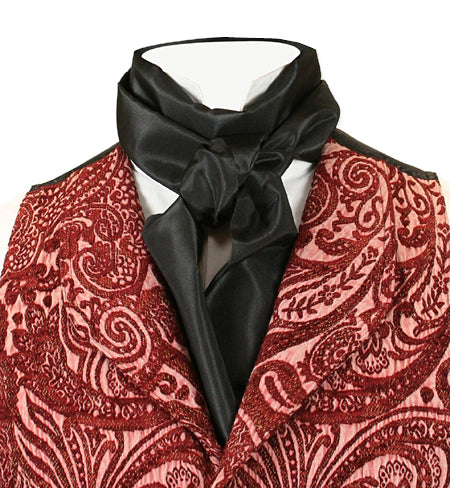
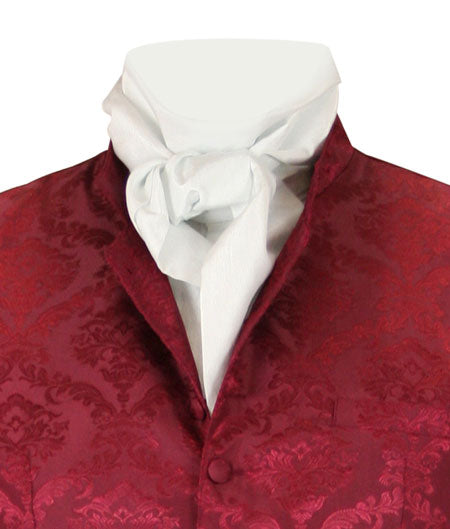
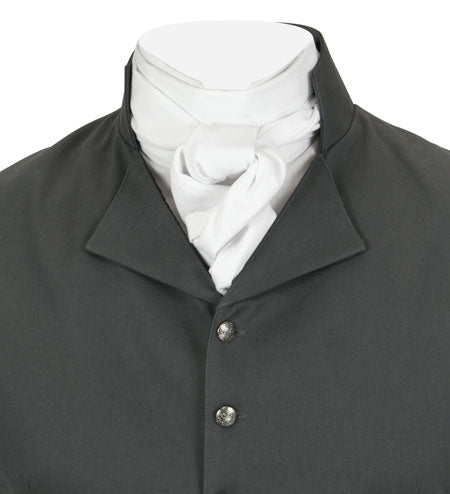
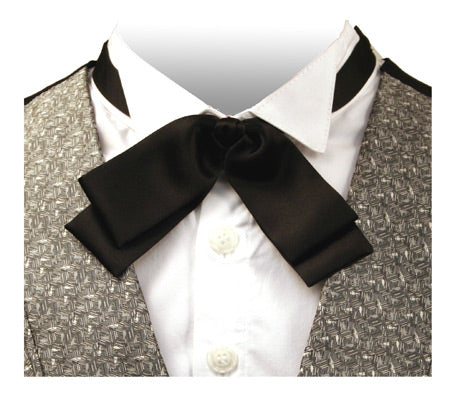
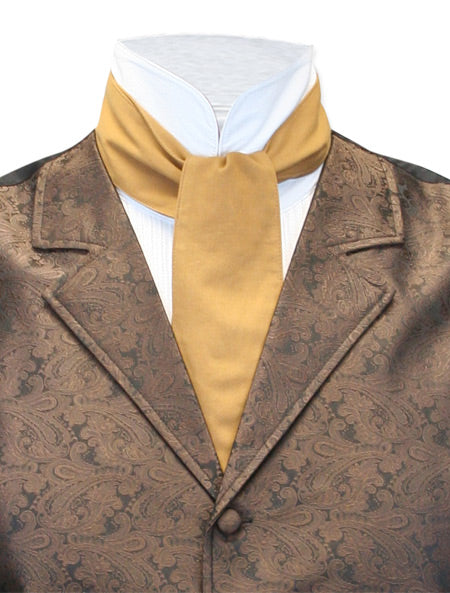
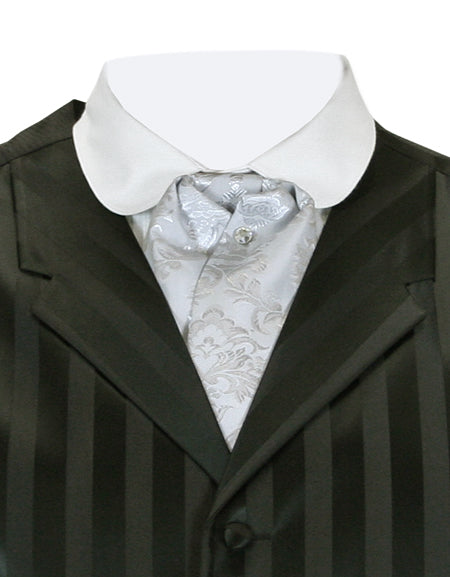
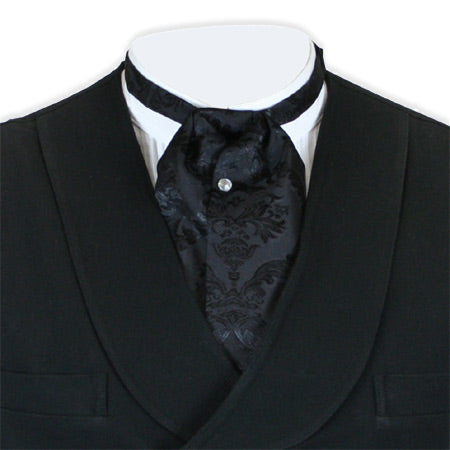
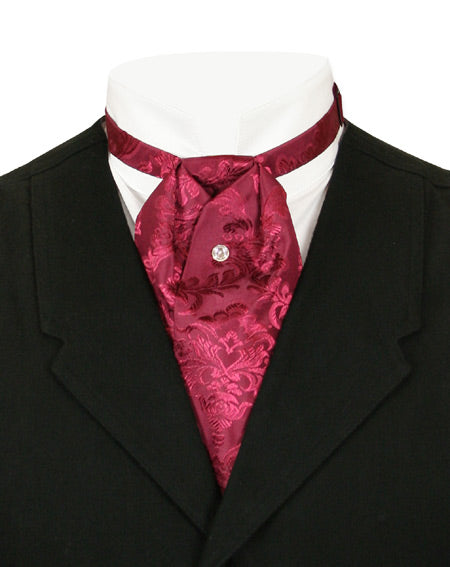
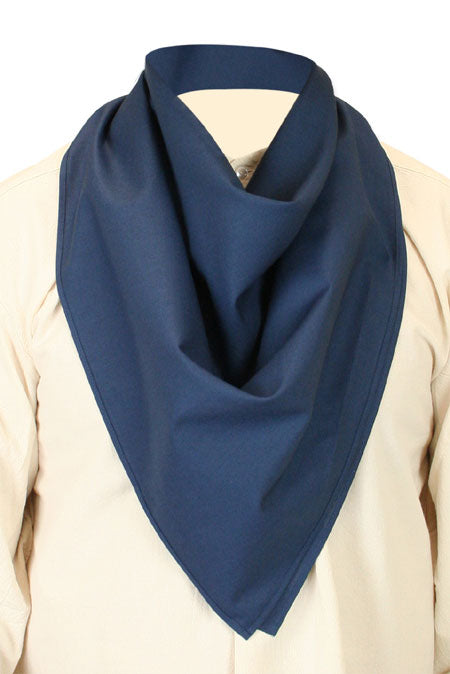
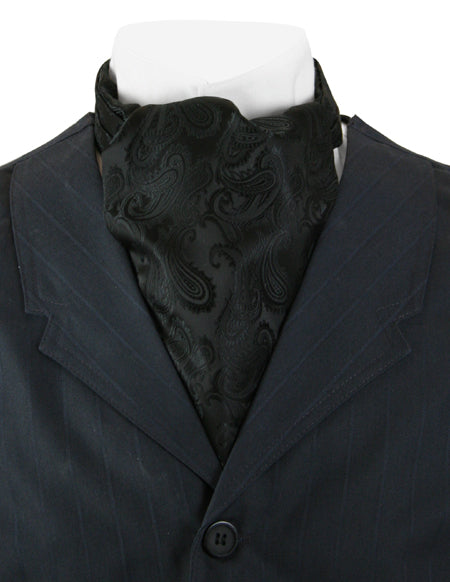
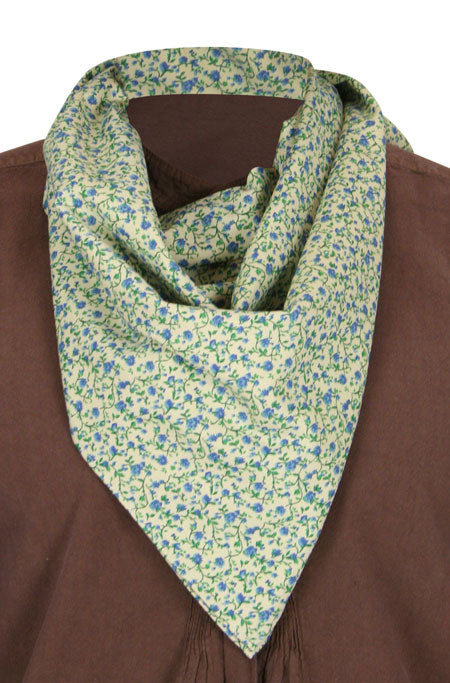
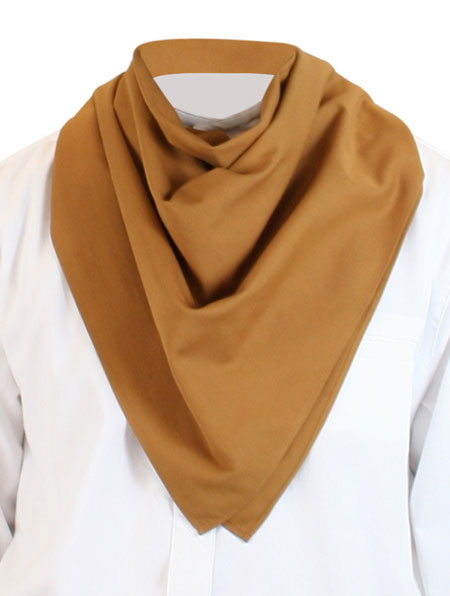
Vintage Neckwear Styles

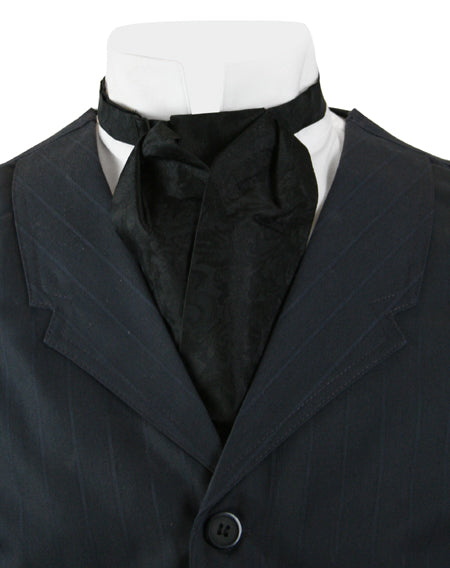
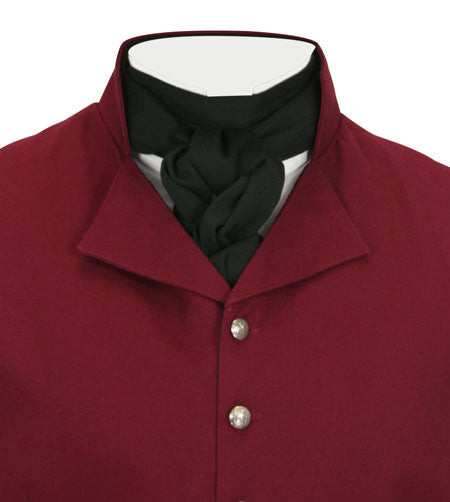
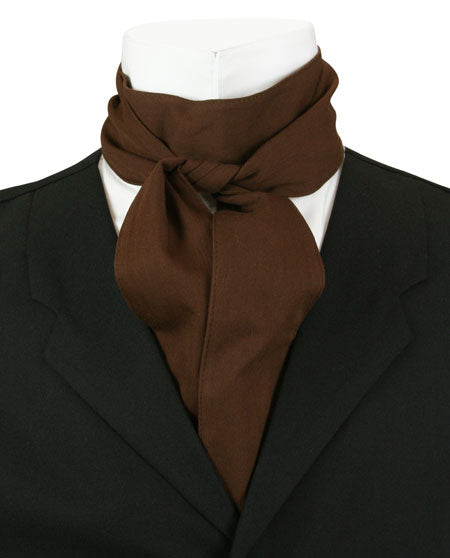
In the early 1800s, the color and knot of a cravat were the cornerstone in a gentleman's ensemble, speaking to both his rank and valet's skill. It is rumored that the meticulous Beau Brummel was so particular about this punctuating accessory that he would often tie 20 cravats before he was satisfied.

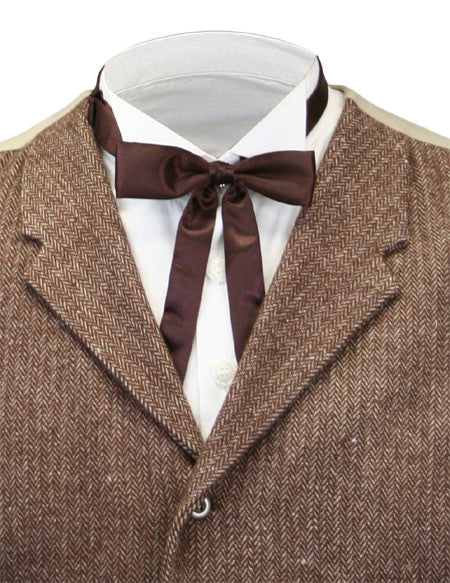
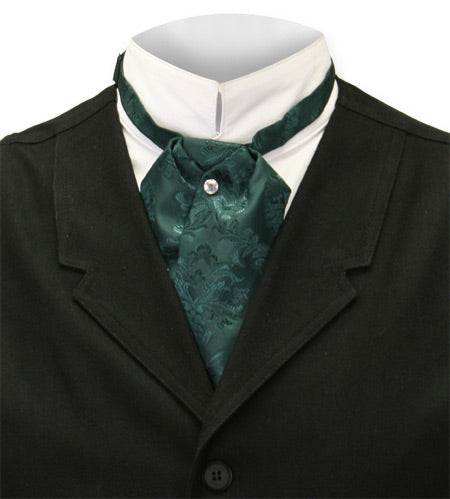
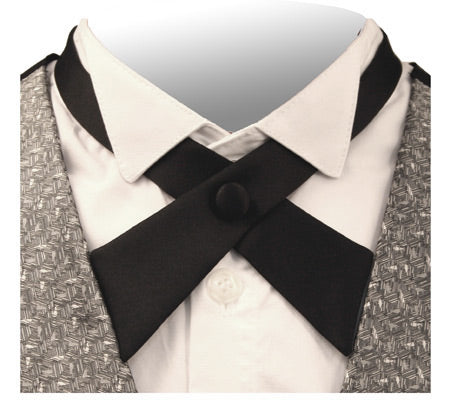
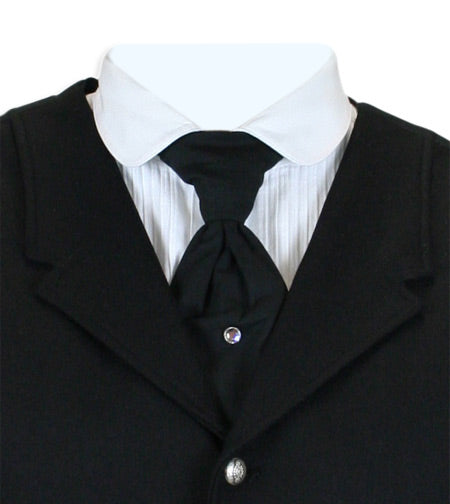
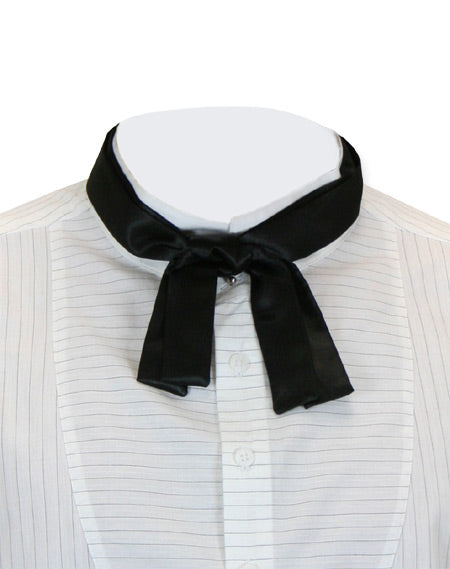
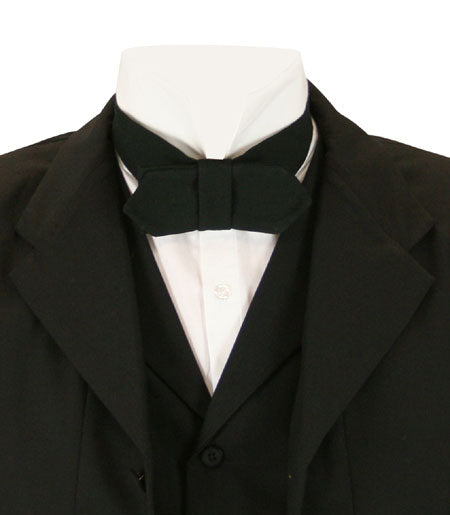
Later in the century, elaborate neck embellishments declined in popularity, but neckwear was still important during the Victorian era. Bow ties were popular, but "four-in-hands" and ascots both gained popularity as the decade progressed. Other types of ties including silk and satin puff ties and "Teck" Ties, with their convenient pre-tied straps, also gained favor. Men's fashion was quite a bit less ornate than that of female counterparts, but neckwear was an accepted way to express a bit of sartorial style.

The shape of neckties has evolved, but neckwear is still a mainstay of modern mens fashion, and many styles from the 19th century are seen even today, showing them to be a true classic.

We offer a full line of men's period necktie styles which are suitable for movie and TV production, theatrical, living history and performing arts requirements, and are also perfect for giving a vintage feel to a modern wardrobe. Please contact us if you have any questions!

Vintage Neckwear Styles
Filter

Filter

83 products

Availability
Product type
Category
Color
  • Black (23 products)
  • White (11 products)
  • Beige (3 products)
  • Brown (9 products)
  • Red (18 products)
  • Blue (14 products)
  • Gray (2 products)
  • Green (6 products)
  • Purple (4 products)
  • Yellow (1 products)
  • Multicolor (5 products)
  • Gold (2 products)
  • Silver (2 products)
Materials
Pattern
Price

The highest price is $40.95

$
$
Scarf/Shawl style
Decade
Care instructions

Q&A About Vintage Neckwear Styles

Victorian gentlemen wore several types of neckwear, including cravats, ascots, stocks, bow ties, four-in-hand ties, puff ties, and teck ties. Early Victorian fashion favored elaborately tied cravats and stock ties, while the later Victorian period saw the rise of the four-in-hand necktie (similar to modern ties) and the ascot for formal occasions. Puff ties featured gathered or "puffed" fabric, while teck ties were also pre-tied for convenience. The necktie evolved significantly during this era (1837-1901) as men's fashion began transitioning toward more practical forms of dress.

Victorian neckties went by several names depending on their style. The most common were the cravat (a wide, elaborately tied neck cloth), the ascot (a formal tie with wide ends), the four-in-hand (the predecessor to the modern necktie), and the bow tie. The stock, essentially a stiffened neck cloth wrapped around the collar, was also popular, especially early in the period. Puff ties featured gathered or "puffed" fabric, while teck ties ("technical" ties) that were four-in-hand styles pre-tied for convenience.

Tying a Victorian cravat or ascot requires more elaborate folding than modern neckties. Please consult the Historical Emporium Fashion Guide for instructions on how to tie a Victorian necktie.

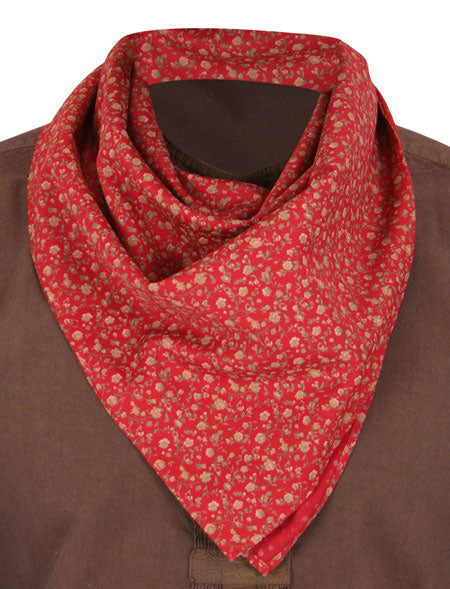
A neck scarf in Victorian times might be called a cravat, particularly if worn formally and tied elaborately. For less formal occasions, it might be called simply a neck cloth or neck scarf. The ascot was a specific type of formal neck scarf, typically made of silk and pinned in place. The word "cravat" itself comes from "Croat," referring to the neck scarves worn by Croatian mercenaries in the 17th century.

Victorian ties were known by various names depending on their style: cravats were elaborate neck cloths; ascots were formal ties with wide ends; stocks were stiff, structured neckbands; four-in-hands were the precursors to modern neckties that emerged in the late Victorian era; bow ties were similar to modern versions but often wider; puff ties were decorative neckwear with gathered or "puffed" fabric; and teck ties were pre-tied "technical" ties. The term "necktie" itself began to be used during this period as the modern concept of the tie developed.

A cravat is a wide, decorated band of fabric worn around the neck and tucked inside an open-necked shirt. An ascot is a type of formal cravat, typically made of silk with wide ends that are crossed and pinned at the throat, often worn for formal daytime events. Both were popular during the Victorian era, with the ascot being slightly more formal than everyday cravats.

A jabot is not technically a tie but rather an ornamental frill or ruffle on the front of a shirt or dress, typically made of lace or sheer fabric. In historical costume, it was worn at the neckline, cascading down the center front of a garment. Jabots were popular during the Victorian era for both men and women, though they originated earlier. Today, they're still seen on some academic and legal dress, particularly on the robes worn by some judges and barristers.

During the Regency period (approximately 1811-1820), the most common form of neckwear was the cravat. This was a long piece of starched linen or muslin that was elaborately folded and tied around a man's neck. The specific style of tying a regency cravat often had its own name, such as the "Mathematical," the "Oriental," or the "Waterfall." The most famous style was perhaps the "Mailcoach," popularized by Beau Brummell.

During the American "Old West" period (roughly 1865-1895), men typically wore various forms of neckwear including neckerchiefs, string ties, and sometimes formal cravats or standard neckties, depending on their social standing and the formality of the occasion.

Regency gentlemen attending formal balls typically wore a tailcoat (usually black or dark blue), light-colored breeches or pantaloons, a waistcoat (often white for formal occasions), dancing slippers or dress shoes, white gloves, and an elaborately tied white cravat, typically starched for formal occasions. The quality of a gentleman's cravat was often seen as a mark of his social standing and fashion sense. Visit our Mens Regency Outfits page for inspiration.

Your Recently Viewed Items