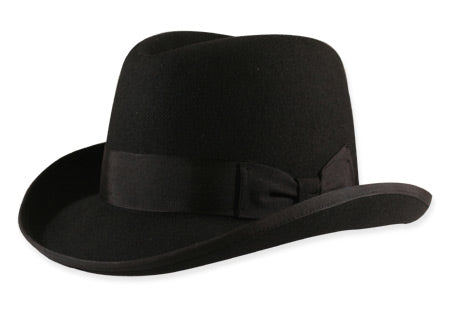
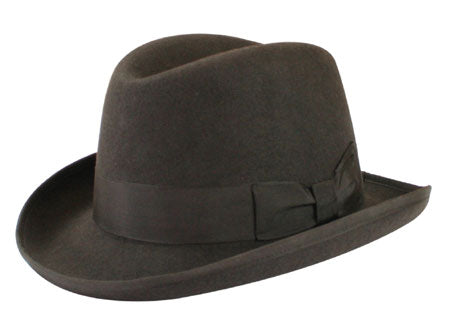
Vintage Style Fedoras

Though the fedora will be forever linked with 1930s gangster, they came into fashion in the late 1800s.

An enduring symbol of masculinity and social status, a fedora is a must-have for any era with its soft brim and indented crown. The term fedora came into existence in the 1890s, and came from an 1880s play. The hat soon eclipsed the homburg in popularity, and still looks great with today's fashions.

We are proud of our vintage mens clothing, suitable for movie and TV production, theatrical, living history and performing arts requirements, and are also perfect for vintage weddings. We hope you find what you are looking for, and please contact us if you have any questions!

Vintage Style Fedoras
Filter

Filter

2 products

Availability
Product type
Category
Color
  • Black (1 products)
  • Brown (1 products)
Size
Materials
Pattern
Price

The highest price is $71.95

$
$
Decade

Q&A About Vintage Style Fedoras

"Wide brim hat" refers to any hat style featuring an extended brim that projects significantly beyond the crown, typically measuring three inches or more. These hats are designed to provide substantial protection from sun, rain, and other elements while creating a distinctive silhouette that has been associated with various professions and lifestyles throughout history.

Victorian men wore hats due to strict social etiquette that deemed bare heads improper in public, practical needs for protection from industrial pollution and weather, and as status symbols indicating social class. The type and quality of a man's hat immediately signaled his position in society, with hat-wearing considered as essential to proper dress as wearing shoes or trousers.

Men's hats were common in the early 1900s due to social expectations of propriety and the practical protection they offered from weather and industrial pollution. Hats were considered an essential part of a complete outfit, signifying social status and respectability, while also serving functional purposes in an era before modern heating, air conditioning, and transportation.

A wide-brimmed hat can be called by several names depending on its specific style, including cowboy hat, fedora, Panama hat, campaign hat, or plantation hat. Other wide-brimmed styles include the Australian outback hat, the sombrero, the boater, and the gaucho, each with distinctive crown shapes and brim characteristics.

Cowboys need wide brim hats to protect themselves from harsh weather conditions including intense sun, rain, and snow while working outdoors for extended periods. The wide brim shields the face, neck, and shoulders from sunburn, keeps rain from running down the neck, and can even be used as an impromptu cup for water or to fan a campfire.

The history of the broad brimmed hat extends back to ancient civilizations including Greece and Rome, but became particularly significant with the Spanish cavaliers' sombreros and later evolved into various regional styles. In America, the iconic cowboy hat developed from Mexican sombreros and Spanish styles, with John B. Stetson commercializing the design in 1865 with his "Boss of the Plains" model that balanced style with practical protection.

To determine your hat size, measure the circumference of your head about one inch above your ears and eyebrows using a flexible measuring tape. Be sure the tape lays evenly around the head and is snugly fitted. Each of our product pages includes a hat size chart to help you find the perfect fit.

Proper care for men's hats varies by material: felt hats should be brushed counterclockwise with a soft brush and stored in hatboxes; straw hats should be wiped with a damp cloth and kept away from high humidity; leather hats need occasional conditioning; and cloth hats can often be spot cleaned or gently hand washed. All hats should be stored away from direct sunlight and handled by the brim rather than the crown to maintain their shape.

Your Recently Viewed Items