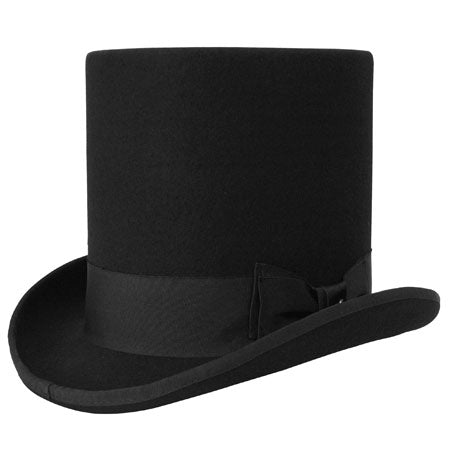
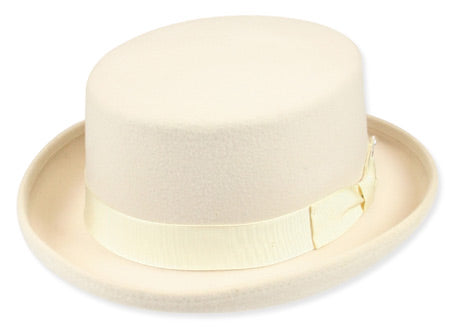
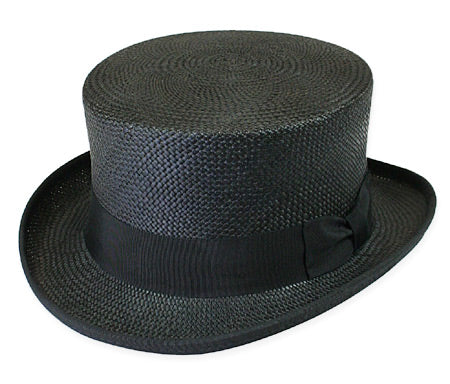
Vintage Top Hat Styles

Top Hats were the mainstay of a Victorian gentleman's wardrobe - the tall, elegant style conveyed wealth and respectability.

Though worn in earlier decades, the hat did not gain real popularity until Beau Brummel decreed it as fashion for proper gentlemen in the early 1800s. Its popularity was cemented by Prince Albert in 1850 and it reigned supreme throughout the Victorian era.

Top hats were originally made of beaver felt, which made them prohibitively expensive. However, as the century wore on, the hat became available in silk and wool felt, making them affordable for gentleman of all means. Though it fell out of favor for daily wear, the Topper is still a symbol of capitalism and wealth.

We offer a full line of men's period clothing and hat styles which are suitable for movie and TV production, theatrical, living history and performing arts requirements, and are also perfect for vintage weddings. We invite you to browse our line, and please contact us if you have any questions!

Vintage Top Hat Styles
Filter

Filter

8 products

Q&A About Vintage Top Hat Styles

Top hats were primarily designed as a status symbol for gentlemen in the 18th and 19th centuries, signifying wealth and social standing. They also served practical purposes by adding height to the wearer and providing protection from the elements.

The top hat traditionally served as formal headwear for upper-class gentlemen attending prestigious social events, government functions, and formal daytime ceremonies. Today, it's mainly worn for highly formal occasions like royal events, certain wedding traditions, and by specific officials during ceremonial functions.

Traditional etiquette dictates that top hats should be worn straight on the head, not tilted, and removed when indoors or during introductions. For formal events like weddings or Royal Ascot, a black top hat is typically paired with morning dress during the day, while evening formal events call for a black or white top hat with white tie attire.

Top hats are still worn at certain prestigious events like Royal Ascot, formal British weddings, and by some officials during ceremonial occasions. They're also used by magicians as part of their performance attire and occasionally appear in avant-garde fashion collections.

Authentic top hats command high prices due to their labor-intensive traditional craftsmanship, the declining number of skilled hatmakers, and the scarcity of traditional materials like silk plush (which is no longer manufactured). Vintage silk top hats are particularly valuable as collector's items and ceremonial wear.

A top hat is also commonly known as a high hat, topper, cylinder hat, or chimney pot hat. In some contexts, it may be called a silk hat when made of silk plush.

The ribbon band encircling a top hat just above the brim is called the hatband or mourning band. Originally, these bands were introduced as symbols of mourning for fallen soldiers and later became a standard decorative element.

The formal and proper name for this headwear is simply "top hat," though in certain historical contexts it was called a "silk hat" when made from silk plush fabric. In the fashion industry, it may also be referred to as a "high crown formal hat."

Headwear, millinery, or chapeau are more elegant or sophisticated terms for hat. "Chapeau" (French for hat) is particularly associated with formal or high-fashion headwear like the top hat.

Abraham Lincoln was famously known for his stovepipe top hat, which became part of his iconic image. Other notable top hat wearers include Isambard Kingdom Brunel (Victorian engineer), Fred Astaire (in his dancing performances), Winston Churchill (on formal occasions), and the fictional characters Uncle Sam and the Mad Hatter.

John F. Kennedy wore a top hat during his 1961 presidential inauguration ceremony, though he is known for breaking tradition by often not wearing it throughout the day's events. His decision to frequently appear bareheaded is often cited as contributing to the decline of formal hat-wearing in American culture.

The top hat symbol is commonly used to represent luxury, wealth, high society, or formal occasions. In board games like Monopoly, the top hat playing piece symbolizes wealth and capitalism, while in performance contexts, it's associated with magicians, ringmasters, and formal entertainment.

Yes, Abraham Lincoln famously wore tall silk top hats, with his stovepipe hat becoming a signature part of his public image. Lincoln reportedly used his 7-8 inch tall hat to store important documents and letters, and was wearing a top hat at Ford's Theatre on the night of his assassination.

Silk top hats are no longer manufactured because the specialized silk plush fabric (called "hatter's plush") required for their production ceased being made around the 1950s when the last factory in France closed. The complex weaving process, declining demand, and the rise of modern alternatives made production economically unfeasible.

Your Recently Viewed Items