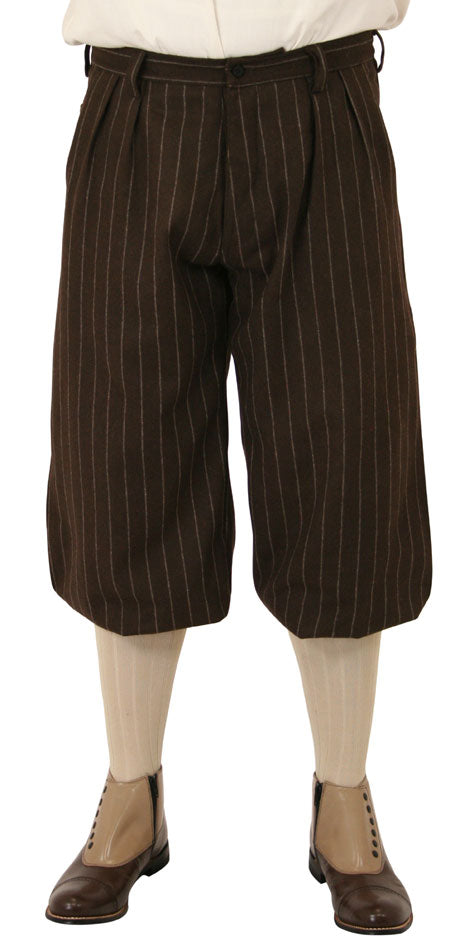
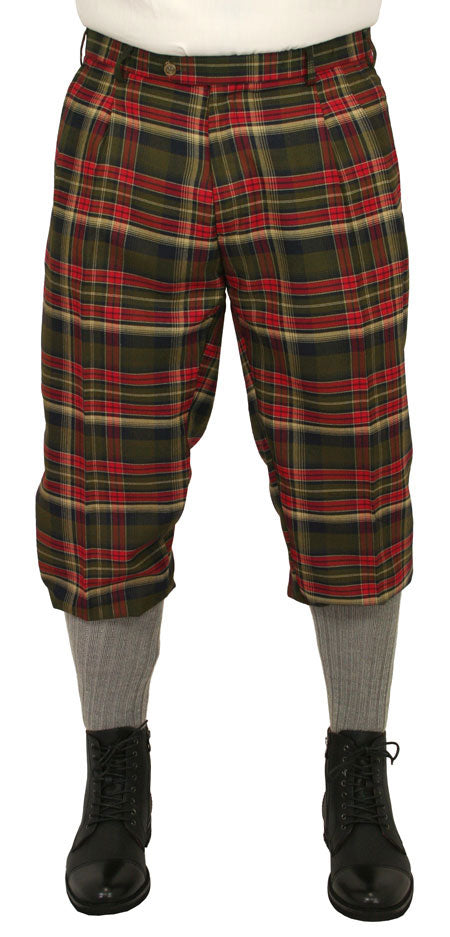
Vintage Style Knickers

Knickers were popular in the US from the 1890s to the 1930s.

They were initially worn for athletic undertakings such as bicycling, golf and hunting, but later became standard fare for vacations and resorts. These knickers were more loosely fitted than knee-length breeches of early centuries and were known as plus-twos, which had two inches of fabric below the knee, and plus-fours, which which had four inches and were fuller in the leg. They could be found in a variety of fabrics, but were most often solids or light striped or plaid.

Our knickers are perfect for vintage golf, antique car shows, pennyfarthing racing, and other vintage inspired activities.

We offer a full line of men's period clothing styles which are suitable for movie and TV production, theatrical, living history and performing arts requirements, and are also perfect for vintage weddings. Please contact us if you have any questions!

Vintage Style Knickers
Filter

Filter

8 products

Availability
Product type
Category
Color
  • Black (2 products)
  • Beige (1 products)
  • Brown (2 products)
  • Red (1 products)
  • Gray (2 products)
  • Green (1 products)
  • Multicolor (1 products)
Size
Materials
Pattern
Price

The highest price is $89.95

$
$
Fit
Decade
Care instructions
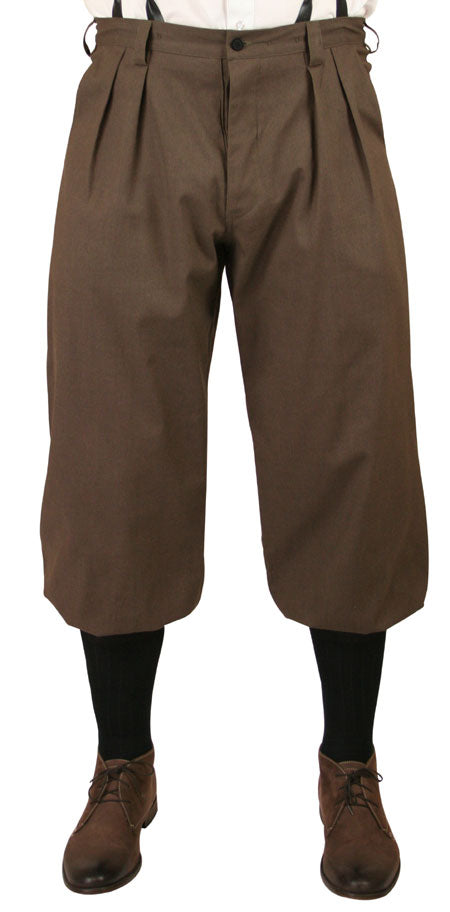
Mens Knickers - Brown Herringbone Tweed

Tweed Knickers - Brown Herringbone

$89.95

Get More Info
Mens Knickers - Gray Herringbone Tweed

Tweed Knickers - Gray Herringbone

$89.95

Get More Info
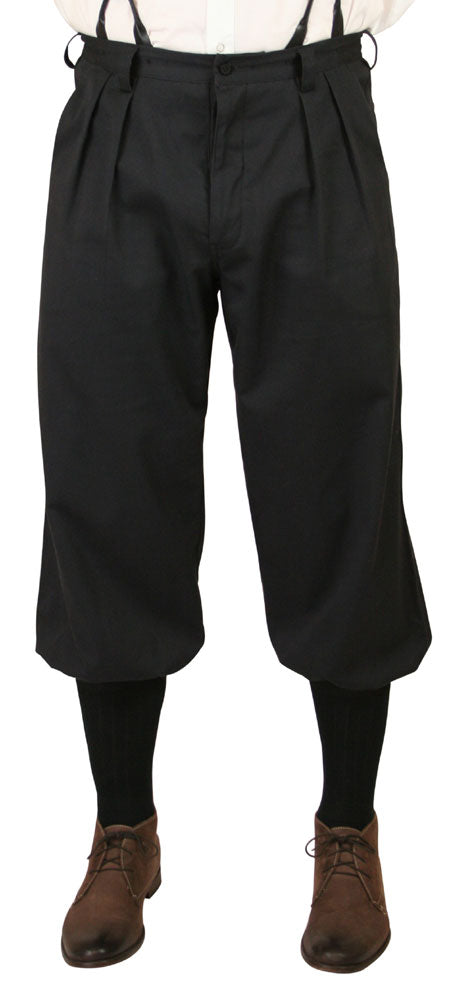
Mens Knickers - Black Twill

Men's Twill Knickers - Black

$81.95

Get More Info
Mens Knickers - Olive Herringbone Tweed

Tweed Knickers - Olive Herringbone

$89.95

Get More Info
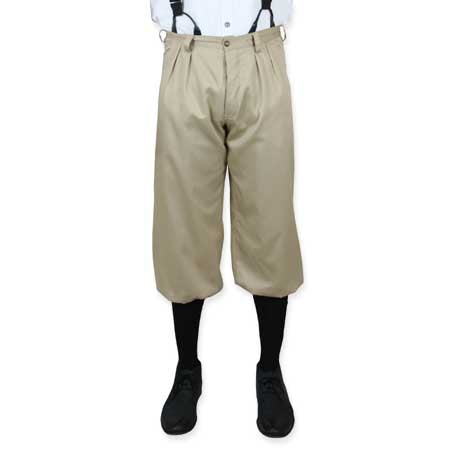
Mens Knickers - Khaki Twill

Men's Twill Knickers - Khaki

$81.95

Get More Info
Mens Knickers - Brown Twill
Mens Knickers - Black and White Plaid

Men's Plaid Knickers - Black/White

$69.95

Get More Info
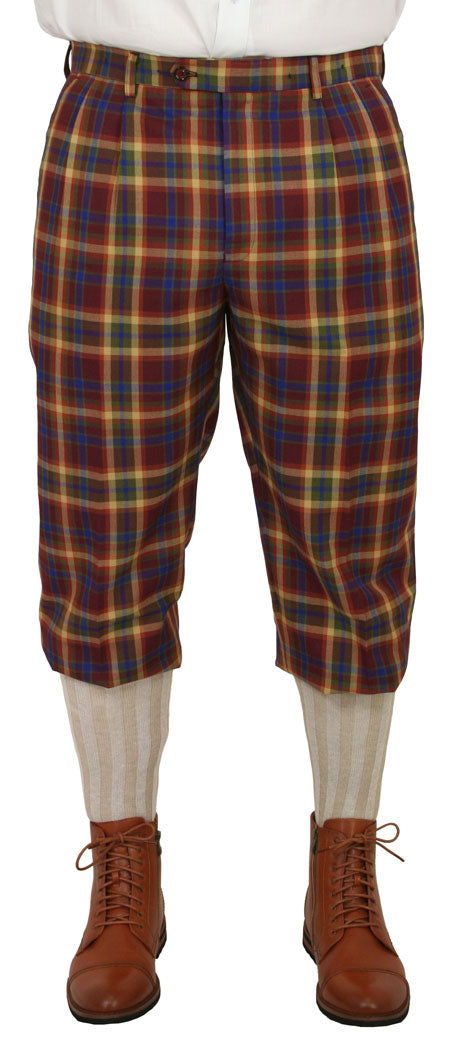
Mens Knickers - Brown and Burgundy Plaid

Men's Plaid Knickers - Brown/Burgundy

$69.95

Get More Info

Q&A About Vintage Style Knickers

Today, knickers are commonly known as plus fours, golf knickers, or vintage golf pants. In casual fashion, similar garments might be called cropped pants, pedal pushers, or capris, though these modern terms don't typically refer to the traditional wool garments with the distinctive gathered knee design.

Knickers gradually went out of mainstream fashion in the late 1930s and early 1940s. While they remained popular for golf throughout the 1920s and into the 1930s, they were largely replaced by full-length trousers for everyday wear after World War II, though they've periodically seen revivals in specialized sportswear and vintage fashion.

The difference between pants and knickers is primarily in length and fit: pants (or trousers) extend to the ankle, while knickers end just below the knee with a gathered or banded closure. Knickers also typically feature a fuller, looser fit through the thigh and were designed for activities requiring greater freedom of movement, unlike the more streamlined design of full-length trousers.

People originally wore knickers for practical reasons – they provided better freedom of movement for activities like golf, cycling, hiking, and hunting compared to full-length trousers. The gathered knee prevented dirt or debris from entering while outdoors, and the fuller cut through the thigh allowed for unrestricted leg movement during active pursuits and sports.

Historically, knickers were worn by men and boys for sporting activities, outdoor recreation, and sometimes as everyday casual wear. They were particularly popular among golfers, hikers, cyclists, and hunters in the early 20th century, and were also common as schoolboy attire in certain periods and regions, especially in Britain and parts of Europe.

Golfers wore knickers because they provided ideal freedom of movement for the golf swing while maintaining a formal appearance appropriate for the course. The loose fit through the thigh allowed unrestricted movement during play, while the gathered knee kept the fabric from interfering with the lower leg and prevented drafts during play in various weather conditions.

The difference between knickers and breeches, historically speaking, is primarily in their timeline, length, fit, and intended use. Breeches came first, emerging in the 16th-17th centuries as close-fitting garments ending just below the knee, often secured with buttons or buckles, and were standard formal menswear through the early 19th century. Knickers (or knickerbockers) appeared later in the 19th century as looser-fitting garments also ending below the knee but with a more relaxed cut through the thigh and seat, initially designed for sporting activities and becoming particularly popular for golf, cycling, and outdoor pursuits by the early 20th century. While both garments terminate at a similar point on the leg, breeches were typically worn with tall stockings for formal occasions, while knickers were often paired with patterned socks for a more casual, sporting look.

The old-fashioned name for knickers was "knickerbockers," named after the Dutch settlers depicted in Washington Irving's 1809 book "A History of New York," where the character Diedrich Knickerbocker wore loose-fitting breeches gathered below the knee. The term was later shortened to "knickers" in everyday use.

In the 1920s, knickers were loose-fitting, baggy trousers that extended to just below the knee where they were fastened by buttons or elastic. They became particularly popular as sportswear during this era, especially for golf, hiking, and motoring, and were typically made of tweed, flannel, or other sturdy fabrics.

Americans typically call these garments "golf knickers," "plus fours," or sometimes "breeches" depending on the specific style. Unlike in British English where "knickers" commonly refers to women's underwear, in American usage the term has retained its association with the knee-length outer garment worn primarily for golf or historical reenactment.

A knickerbocker is the original full term for what we now commonly call knickers - loose-fitting breeches gathered and fastened just below the knee. The name derives from the Dutch settlers of New York depicted in Washington Irving's 1809 book, where the fictional narrator Diedrich Knickerbocker wore this distinctive style of trousers, which later became fashionable for sports and outdoor activities.

In modern British usage, "knickers" primarily refers to women's underwear or panties. However, in historical fashion context, British knickers would refer to the same knee-length trousers as elsewhere - loose-fitting garments that gather below the knee, particularly associated with sporting activities like golf or hiking in the early 20th century.

The difference between plus fours and knickers is mainly in their length and fullness: plus fours are a specific type of knickers that extend four inches below the knee (hence the name), creating a particularly baggy appearance. Traditional knickers might be less full and extend to varying lengths below the knee, while plus fours are characterized by their distinctively voluminous silhouette.

We say "a pair of knickers" because, like trousers or pants, knickers were historically made as two separate leg coverings that were joined together. This linguistic tradition dates back to when legwear consisted of individual garments for each leg that were tied together at the waist, and the terminology persisted even after they became a single garment.

Your Recently Viewed Items