Frock Coat

Filter

Filter

23 products

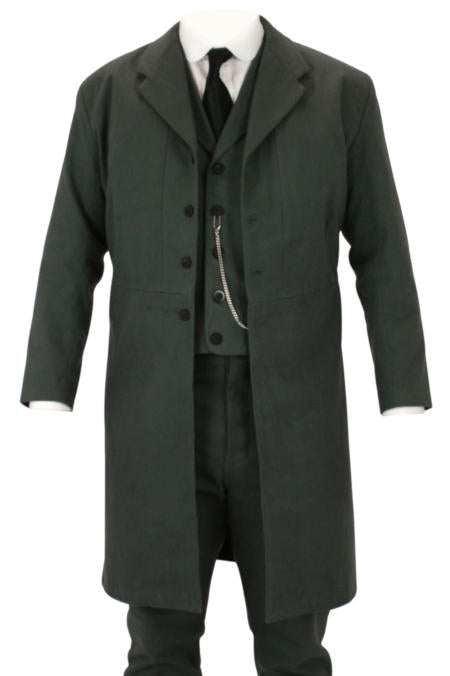
Callahan Frock Coat - Charcoal

Callahan Frock Coat - Charcoal

$193.95

Get More Info
Sable Brushed Cotton Frock Coat

Sable Brushed Cotton Frock Coat - Brown

$181.95

Get More Info
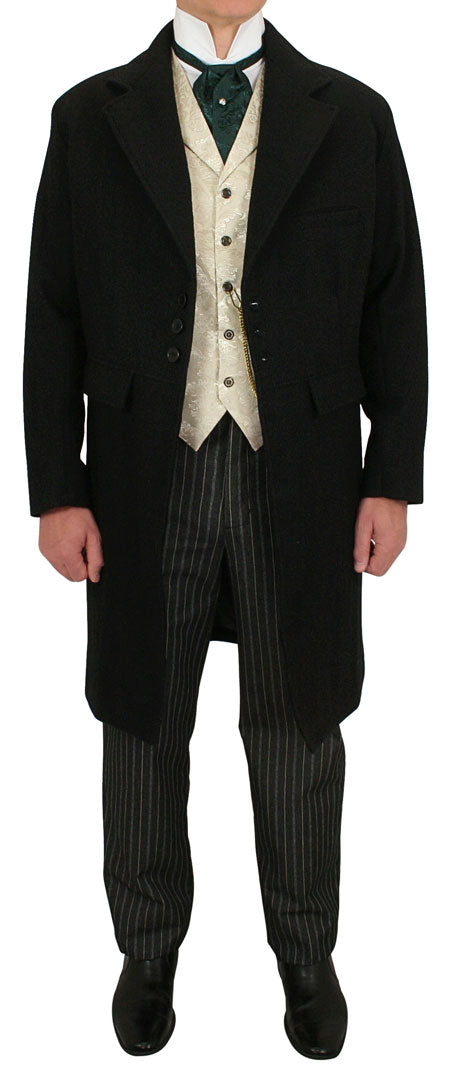
Callahan Frock Coat - Black

Callahan Frock Coat - Black

$193.95

Get More Info
Double-Breasted Frock Coat - Charcoal

Victorian Double-Breasted Frock Coat - Charcoal

$199.95

Get More Info
Madison Brushed Cotton Frock Coat - Light Gray

Madison Brushed Cotton Frock Coat - Light Gray

$181.95

Get More Info
Livingston Brushed Cotton Frock Coat

Livingston Brushed Cotton Frock Coat - Black

$181.95

Get More Info
100% Wool Frock Coat - Black

100% Wool Frock Coat - Black

$249.95

Get More Info
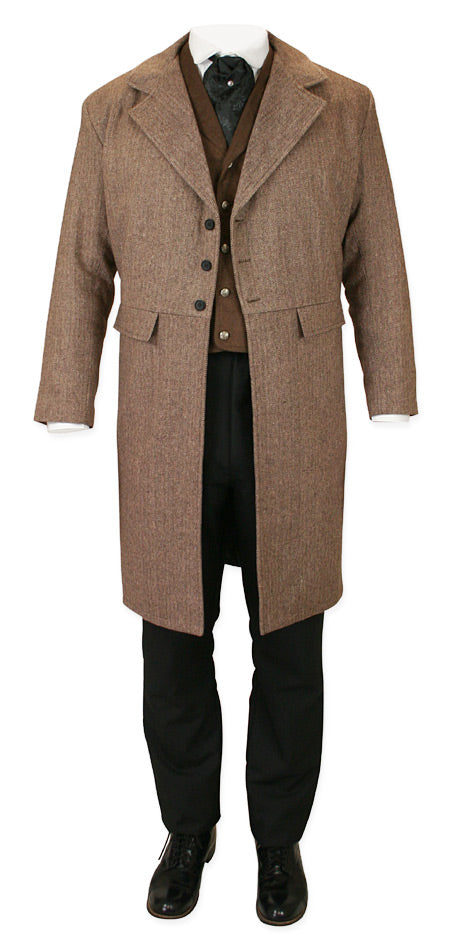
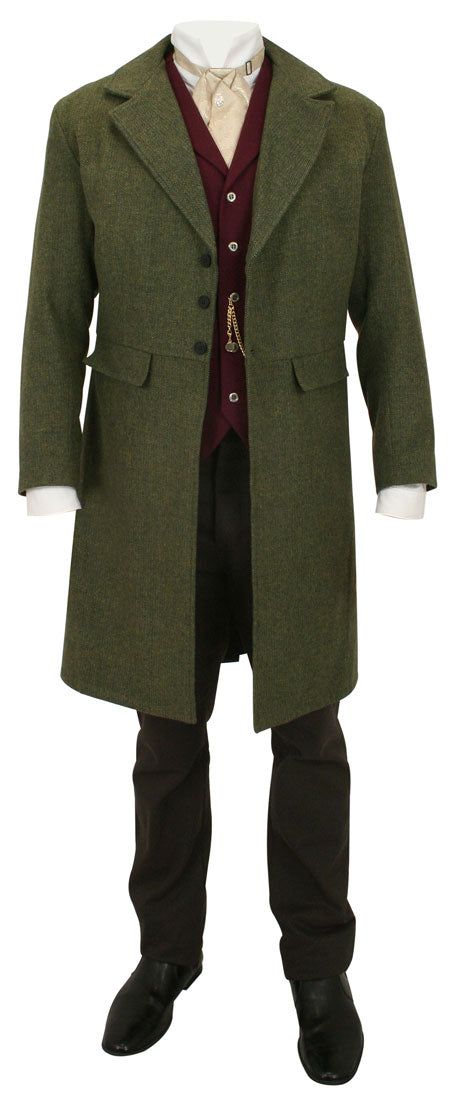
Emerson Frock Coat - Brown Herringbone Tweed

Emerson Tweed Frock Coat - Brown Herringbone

$199.95

Get More Info
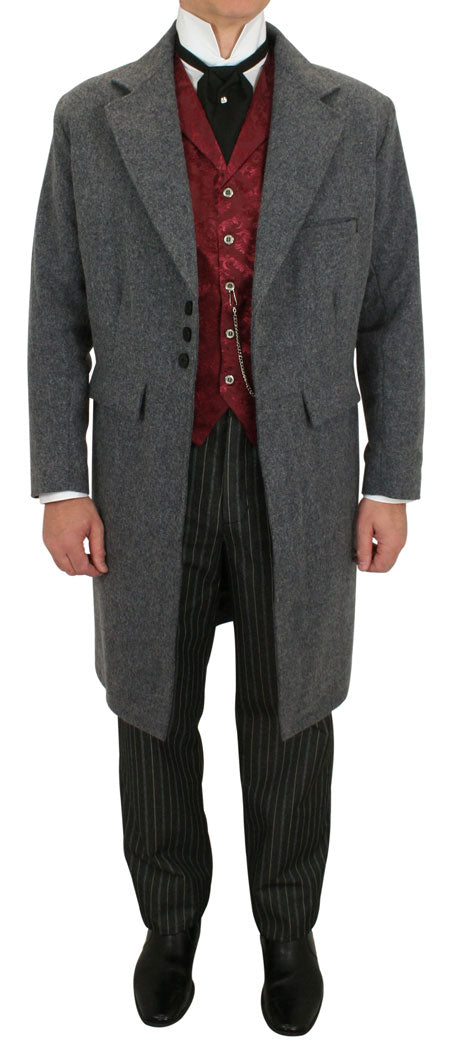
100% Wool Frock Coat - Gray

100% Wool Frock Coat - Gray

$249.95

Get More Info
Double-Breasted Frock Coat - Black

Victorian Double-Breasted Frock Coat - Black

$199.95

Get More Info
Patterson Brushed Cotton Frock Coat - Charcoal

Patterson Frock Coat - Charcoal

$181.95

Get More Info
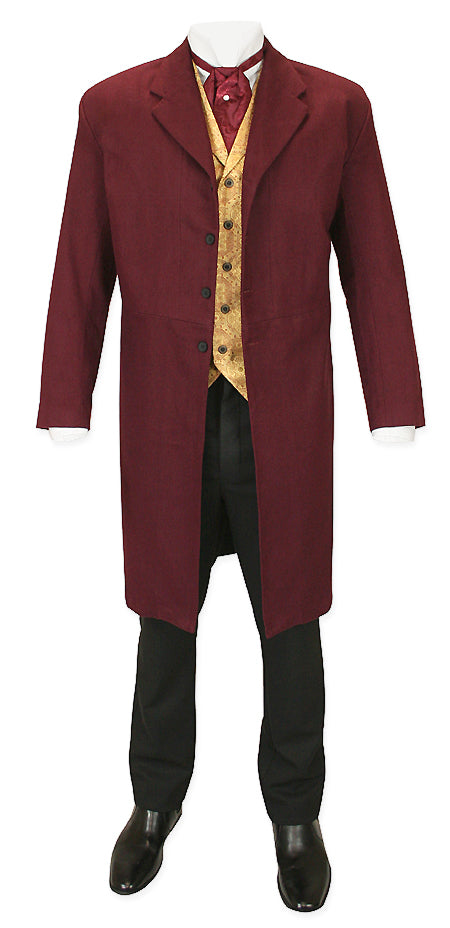
Emerson Frock Coat - Burgundy

Emerson Frock Coat - Burgundy

$199.95

Get More Info
Callahan Frock Coat - Dark Mocha Brown

Callahan Frock Coat - Dark Mocha Brown

$193.95

Get More Info
Rifle Frock Coat - Black

Rifle Frock Coat - Black

$299.95

Get More Info
Highland Frock Coat - Black

Highland Frock Coat - Black

As low as $279.95

Get More Info
Wooster Frock Coat - Tan Plaid

Wooster Frock Coat - Tan Plaid

$193.95

Get More Info
Emerson Frock Coat - Gray Herringbone Tweed

Emerson Tweed Frock Coat - Gray Herringbone

$199.95

Get More Info
Emerson Frock Coat - Black

Emerson Frock Coat - Black

$199.95

Get More Info
Davenport 100% Wool Frock Coat - Brown

Davenport 100% Wool Frock Coat - Brown

$199.95

Get More Info
Callahan Frock Coat - Steel Gray

Callahan Frock Coat - Steel Gray

$193.95

Get More Info
Callahan Frock Coat - Khaki

Callahan Frock Coat - Khaki

$193.95

Get More Info
Callahan Frock Coat - Gray

Callahan Frock Coat - Gray

$193.95

Get More Info
Brewster Frock Coat - Black

Brewster Frock Coat - Black

$199.95

Get More Info

Q&A About Frock Coat

The term "frock coat" derives from the French "frac," a loose-fitting garment worn by working men in the 18th century. As it evolved into formal wear, the name persisted despite its transformation into a fitted, knee-length coat. The word "frock" originally referred to a loose, long garment worn by monks and later came to describe various types of clothing before becoming specifically associated with this gentleman's coat.

Frock coats were worn by respectable gentlemen across the social spectrum during the 19th century, from middle-class businessmen to aristocracy and royalty. They were standard attire for doctors, lawyers, politicians, clergymen, and businessmen. Notable wearers included Abraham Lincoln, Charles Dickens, Otto von Bismarck, and Prince Albert, with the style becoming synonymous with Victorian male respectability and professional status.

The frock coat became obsolete as everyday wear by the early 20th century, replaced by the shorter lounge suit around 1910-1920. While considered definitively old-fashioned today, it has occasionally seen brief revivals in high fashion and remains in use for certain traditional formal occasions, particularly in Britain. It's now primarily seen in historical reenactments, period dramas, formal state occasions, and as part of ceremonial dress for certain institutions.

Historically, frock coats were formal daywear for professional, social, and ceremonial occasions between morning and 6:00 PM. Today, they are rarely worn except for certain traditional British ceremonies (royal weddings, Ascot), as part of specific institutional uniforms, or by historical reenactors. When worn in contemporary settings, they're appropriate for the formal daytime events where historical dress is welcomed or expected. Of course, you can also wear a frock coat as a vintage counterpoint to modern business attire.

A frock coat features a full skirt that hangs continuously around the body with a horizontal bottom edge, while a tailcoat has its front cut away above the waist with two long tails hanging behind. Frock coats were considered less formal daywear, typically single or double-breasted with a knee-length skirt, whereas <a href="/store/mens-coats.php?type=Tail Coats">tailcoats</a> were strictly evening formal wear with a distinctive swallow-tail back.

The frock coat was a fitted, knee-length formal daytime garment typically made of wool, while the great coat (or greatcoat) was a heavy, looser-fitting overcoat designed for cold weather with a longer length, often reaching the calf or ankle. Frock coats were part of a gentleman's standard attire, while greatcoats were protective outerwear worn over other clothing.

The sack coat, which evolved into the modern suit jacket, was shorter, less fitted, and more casual than the frock coat, typically ending at hip-length rather than the knee. Frock coats featured a waist seam, creating a tailored silhouette, while sack coats hung straight down without a waist seam or darting, creating a looser "sack-like" appearance that became the precursor to modern business attire.

The Newmarket coat was a specific style of frock coat associated with British equestrian and sporting culture, popularized in the early 19th century around the famous Newmarket racecourse. It typically featured a distinctive cutaway front, bright buttons, and often came in colors like buff, brown, or green rather than the standard black of formal frock coats, marking it as appropriate for country pursuits and less formal occasions.

A swallowtail coat (commonly called a tailcoat) features a front that cuts away at the waist and two long tails hanging from the back, resembling a swallow's forked tail. Unlike the frock coat, which was daywear with a continuous skirt around the body, the swallowtail coat was strictly evening formal wear. It remains in use today as white tie attire, worn by orchestra conductors, and as part of wedding and ceremonial dress.

The morning suit (or morning dress) earned its name from being appropriate formal daywear worn during morning social events that extended into afternoon. Evolving from the frock coat in the late 19th century, it features a cutaway morning coat, striped trousers, and waistcoat. Despite the name, it was worn throughout daylight hours, not just mornings, and became the most formal daytime attire after the frock coat fell from fashion.

The bottom portion of a frock coat is called the "skirt," referring to the part of the coat below the waistline that flares outward slightly and extends to the knee. The horizontal bottom edge is called the "hem," while the vents in the back are called "skirt vents" or "back vents." On <a href="/store/mens-coats.php?type=Tail Coats">tailcoats</a>, the long extensions at the back are specifically called "tails."

Frock coats gradually declined in popularity between 1890 and 1920, finally becoming obsolete as everyday wear after World War I. The shorter, less formal lounge suit (modern business suit) replaced it for professional settings, while the morning coat took over for formal daytime occasions. By the 1930s, frock coats were considered old-fashioned and primarily ceremonial, marking the end of nearly a century as the standard formal male attire.

Need more information? Ask a question about our Frock Coat

Your Recently Viewed Items