Vintage Spats and Gaiters

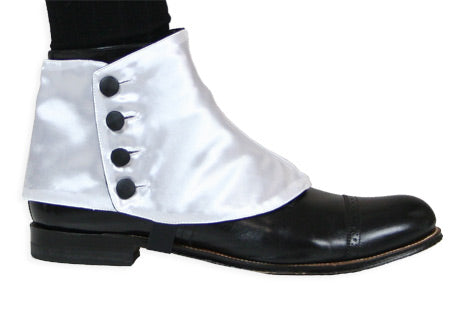
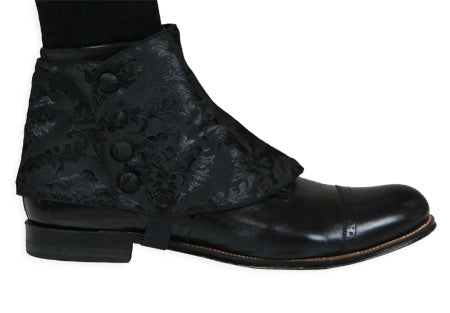
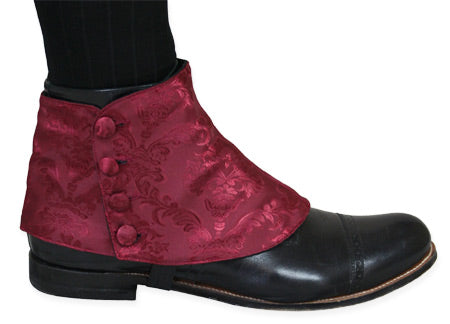
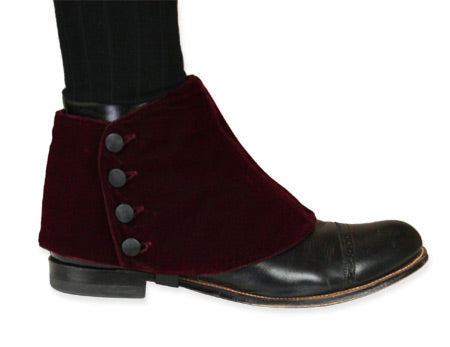
Spats, also known as spatterdashes or spatter guards, are a classic outdoor footwear accessory which cover the ankle and instep. Their intended purpose was to protect shoes and socks from mud or rain, but also served as a very stylish feature of dress during the period.

Gaiters are a very similar garment to spats, however they are intended to be worn over the lower trouser leg as well as the shoe. Gaiters are more rugged, with origins in vintage military uniform styles.

Not to be confused with cheap costume spats, our spats are the genuine article, sized to fit with real fabric and metal buttons, durable cotton lining, and a subtle black elastic stirrup to maintain a tidy look. The gaiters are durable leather, with leather straps and stirrups.

We also carry ladies spats!

All of our spats & gaiters are made exclusively for us to our exacting standards, and you will not find these styles offered by anyone else. We are proud of our line of exclusive spats and gaiter styles, and invite you to contact us if you have any questions.

Vintage Spats and Gaiters
Filter

Filter

24 products

Availability
Product type
Category
Color
  • Black (5 products)
  • White (6 products)
  • Beige (1 products)
  • Brown (3 products)
  • Red (5 products)
  • Blue (1 products)
  • Gray (3 products)
  • Green (1 products)
  • Multicolor (8 products)
  • Gold (1 products)
  • Silver (1 products)
Size
Materials
Pattern
Price

The highest price is $39.95

$
$

Q&A About Vintage Spats and Gaiters

Spats (originally called spatterdashes) were originally designed to protect footwear from the dirt, mud and animal dung found on the many unpaved roads of the 1800s. Over time they evolved into a popular fashion accessory that reflected a sense of elegance and social status.

Spats were most popular from the late 19th century (1800s) through the early 20th century (1900s), particularly between the 1910s and the 1920s when they became a symbol of high society and meticulous dress.

The decline in spat usage began in the late 1920s, primarily due to a shift towards more casual clothing styles. The death knell of spats in England came in 1926 when King George V and his sons arrived at a garden party without any spats.

While not common today, people still wear spats for historical reenactments, steampunk costumes, formal wear, or marching bands. They're also a subtle way to incorporate a distinctive vintage accent into modern styles, turning simple dress shoes into something special.

Yes, spats can be worn with modern dress shoes or short boots. They are best suited for shoes with at least a slight heel to hold the arch strap in place, making most dress shoes or dress boots (like chelseas or lacers) compatible; bulky work boots might be too large at the ankle.

Yes, during the 1920s, spats were indeed worn by gangsters and mobsters, particularly Al Capone. This image was cemented in popular culture as gangsters were often depicted in movies and books as flamboyantly wealthy and well dressed with hats, spats and expensive suits.

Spats and gaiters are both protective leggings, but differ in design. Spats are meant to cover the shoe and ankle, but are worn under the pant leg. Gaiters tend to be longer, and cover the shoe, ankle, and lower pants leg. Gaiters are also often made from a more durable material than spats.

Spat sizing is based on the circumference measured around your ankle *over the shoe* you intend to wear, as detailed in our sizing guide for vintage spats. Measure carefully and then consult the specific sizing chart provided to find your correct size.

First, ensure the spats are unbuttoned. Tuck the toe of your shoe into the front of the spat, then pull the spat up and back until the arch strap rests securely under the arch of your shoe, just ahead of the heel. Fasten the buttons snugly, starting from the bottom and working your way up. When worn, the buttons should be facing outwards, away from the instep, so that they're visible when viewed from the side.

Historically, heavy-duty spats were made from durable materials like wool or canvas for protection. As they became fashion items, finer fabrics such as velvet, brocades, and satin were also used for a more elegant look.

White is arguably the most classic and common color, especially in cotton or satin for formal occasions. However, coordinating spats in matching or complementary colors with neckwear or other accessories is a stylish choice that still makes a statement today.

Your Recently Viewed Items