Men's Portrait Gallery 1860

Gentlemen in Long Coats

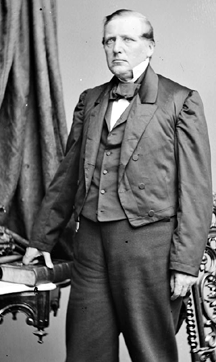
Secretary of the Interior Usher (left) displays a fine example of a tailcoat and elaborate cravat that was often used for dress occasions. While Secretary of State for the CSA Hunter (right) shows us the frock coat ensemble that was worn by established businessmen during the early 1860's.  His trousers clearly show the high-waist that was favored throughout the mid nineteenth century.  Notice the wide, elaborate cravats that were worn during the early 1860's.  By mid-decade gentlemen were most often seen with narrow string-style cravats. 

To recreate these looks: choose a notch- or a shawl-collar vest. For the latter part of the decade a high cut notch collared vest would be ideal.  The Tombstone and Wing Tip Shirts would reflect the collared white shirts. Finish with a Frock Coat that suits the look.
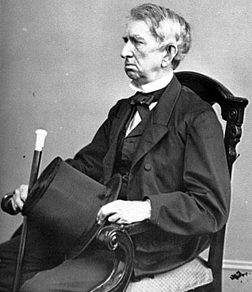
Secretary of State
William Seward

Secretary of State Seward shows the complete outfit for the distinguished Victorian gentleman. His ensemble combines an unmatched coat and trousers. But most interesting in this photo are his fine top hat and walking stick.

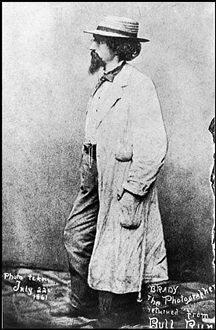
Matthew Brady (1861)

Photographer Matthew Brady, clearly a man of style and confidence, shows his working clothes in this portrait taken in 1861 just after Bull Run. His high-waisted work trousers have a subtle stripe similar to several styles we offer. His long duster is a bit unusual for that era but would work well to keep him dry and protected while in the field.

Q&A About Men's Portrait Gallery 1860

Men in the 1860s primarily wore layered outfits consisting of coats, vests (waistcoats), trousers, shirts, and hats. The silhouette evolved from a boxy, oversized look in the early part of the decade to a slimmer, taller silhouette in the latter half, with clothing options including frock coats, sack coats, cutaway coats, and various styles of trousers and accessories.

Men's fashion in the 1860s underwent a significant transition from the boxy, oversized silhouette of the early decade to a narrower, taller look in the latter half. This evolution was characterized by a shift from loosely cut coats with wide lapels and wide-legged trousers to slimmer-fitting coats with defined waists, narrower sleeves, and more tapered trousers, foreshadowing the sleek style that would define the 1870s.

Men's fashion in the 1860s was heavily influenced by the American Civil War, advancements in manufacturing technology, the rise of ready-to-wear clothing, and social customs like mourning dress following Prince Albert's death in 1861. The standardization of sizing resulting from military uniform production and the invention of synthetic dyes in the 1850s also played significant roles in shaping the decade's fashion trends.

Upper class men in the 1860s wore high-quality, tailored garments made from premium fabrics like fine wool, silk, and velvet. Their wardrobe typically included formal frock coats for day wear, tailcoats for evening occasions, waistcoats in luxurious damasks and jacquards, and accessories like silk top hats, gold watch chains, and fine leather boots, all following the latest fashions while maintaining appropriate attire for different social occasions.

Lower class men in the 1860s typically wore simpler, more durable clothing made from inexpensive fabrics like cotton, wool, or linen. Their wardrobes consisted of basic work shirts, often without attached collars, sack coats or older-style jackets, sturdy trousers held up by suspenders, and practical footwear like work boots. Soft felt wide-awake hats were common, and while they followed general fashion trends, their clothing emphasized functionality and longevity over style.

Historical Emporium offers well-crafted reproductions of 1860s men's clothing that balance historical accuracy with modern durability. Their garments feature period-appropriate details, cuts, and fabrics while incorporating contemporary construction techniques for comfort and longevity. For historical reenactors, costume enthusiasts, or those interested in Victorian fashion, the collection provides accessible options that capture the essence of 1860s menswear.

Men in the 1860s wore several types of coats including frock coats for formal daywear, sack coats for informal occasions, cutaway (morning) coats for business attire, and various overcoats like the Chesterfield, Inverness, and Ulster for outerwear. Specialized coats such as smoking jackets for home wear and Norfolk or Reefer jackets for sporting activities were also popular.

Men's trousers in the early 1860s were cut loose with wide pant legs and no pleats, gradually tapering towards the ankle. They were typically held in place by suspenders and could be light or dark, either matching or contrasting with the jacket. As the decade progressed, trousers became slimmer to match the changing overall silhouette, and patterns like stripes and bold checks were sometimes seen.

Men's shirts in the 1860s were predominantly white pullover styles with partial front plackets, though stripes and plaids were still seen. Most shirts were made without attached collars or cuffs, which were buttoned on separately. The most fashionable neckwear was the narrow dark-colored tie fastened with a knot or bow, though taller stocks and wide neckcloths were still worn, particularly by older gentlemen or for formal occasions.

Men's hats in the 1860s included tall"stovepipe" black top hats for formal occasions, hard felt derby/bowler hats for more casual wear, and straw boaters for summer leisure. The "Boss of the Plains" hat invented by John B. Stetson in 1865 became popular among ranchmen and settlers in the American West, while soft felt wide-awake hats and military "kepi" styles were common for work and during the Civil War.

Men's footwear in the 1860s was dominated by boots, typically made of black or brown leather with lace-up or side-button closures.Tall boots with square toes were particularly common during this period, while shoes were primarily reserved for sports like tennis or cricket. Spatterdashers (spats) were worn both as practical protection for footwear and as fashionable accessories in colorful or unique fabrics.

Men's vests or waistcoats in the 1860s were essential wardrobe items that were typically single-breasted with a shawl or rolled collar. Vest necklines began buttoning higher on the chest as the decade progressed, revealing less of the shirt underneath. While conservative vests often matched the jacket and pants in understated colors, they could also be found in luxurious damasks and rich jacquards in the vibrant hues made possible by newly developed synthetic dyes.

Men's hairstyles in the 1860s were typically cut at ear level and parted to one side, often styled with a wave. Facial hair was extremely popular, with sideburns being prevalent—these ranged from shorter styles to long "muttonchops" or "Dundreary whiskers" that extended down the sides of the face.

Popular men's accessories in the 1860s included pocket watch chains, often called "Albert chains" after Prince Albert, which were displayed draped as single or double chains across the vest. Canes, gloves, and spats (spatterdashers) worn over shoes or boots were also fashionable accessories that completed a gentleman's ensemble.

For formal evening wear in the 1860s, men wore tailcoats with matching vests and trousers, accompanied by a white shirt featuring a stiffly starched front decorated with embroidery, pleats, tucks, or ruffles. A wide cravat of light-colored silk or a white bow tie completed the outfit, along with a silk top hat (often the Gibus collapsible opera top hat). By the end of the decade, velvet or silk shawl collars became fashionable additions to the tailcoat.

The American Civil War significantly impacted men's fashion by causing textile shortages and changing production methods. The need to quickly produce military uniforms led to the standardization of sizing and accelerated the development of ready-to-wear clothing. After the war ended in 1865, fashion shifted toward the slimmer silhouette that would characterize the late Victorian period, and certain military-inspired items like the kepi hat remained popular as workwear for years afterward.

Ready-to-wear clothing in the 1860s represented a revolutionary development in men's fashion, made possible by advancements in sewing machine technology and standardized sizing. This democratization of fashion allowed for greater variety in men's clothing, made fashionable attire more accessible across social classes, and began to blur some of the stark visual distinctions between social strata that had been more pronounced in earlier decades.

Customer Reviews of our Store

Excellent Quality and Service

Sarah M.

October 15, 2025

I am absolutely thrilled with my purchase! The quality of the fabric and construction is outstanding. The attention to historical detail is impressive, and the customer service team was incredibly helpful with sizing questions.

Perfect for My Event

Rebecca L.

September 28, 2025

I ordered this outfit for a historical reenactment, and it exceeded all my expectations. The fit was perfect, and I received so many compliments. Will definitely be ordering from Historical Emporium again!

Authentic and Beautiful

Jennifer K.

September 10, 2025

The attention to detail in these garments is remarkable. The fabrics are high quality, and the construction is solid. I appreciate that they offer authentic historical clothing that actually fits modern women.

Great Customer Support

Emily R.

August 22, 2025

Had a question about my order and the customer service team responded quickly and professionally. The product arrived on time and was exactly as described. Highly recommend this company!