Men's Portrait Gallery 1870

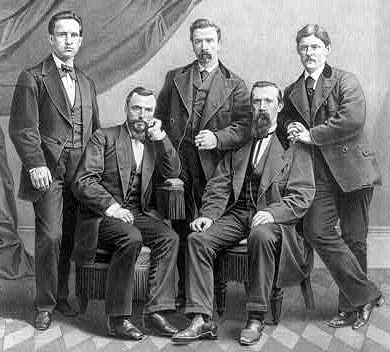
The 'Cuba Five'
1870

The 1870's saw the rise of the sack suit to widespread popularity, on any street many fashionable young men could be seen in narrowly tailored sack suits.  But as this drawing shows, it was still common to see frock coats during the day. It also remained common for gentlemen to pair mismatched separates instead of a suit, particularly common was fawn or light brown trousers with black coats.

Most distinctive of this era is the slim cravat with very small bow tie as seen on the gentleman in the back left.  Also, notable is the hairstyle, cut very short and oiled flat. This was paired with a variety of different facial hairstyles as seen above.  Some of the most common were - the full moustache on the back right, the Van Dyke in the back middle. Many gentlemen still wore full beards or walrus moustaches, long drooping and oiled.

The gentlemen pictured above were Irish freedom fighters who were released from prison and exiled to the country of their choice by the British Goverment.  These five left Liverpool on the Cuba and arrived in New York to a hero's welcome from the Irish Community.

To recreate these looks: choose a high notch-collar vest or a low cut shawl collar vest.  A Frock Coat or Sack Coat are both good choices and reflect the diversity of the decade. Choose what you like best.
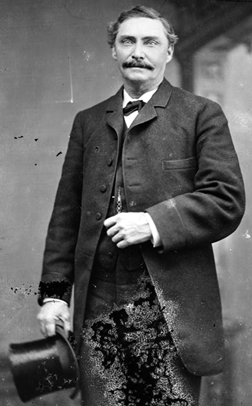
Senator Wilkinson Call
Florida

Senator Call of Florida shows a lovely frock coat suit with the small tied cravat that was so popular during the time. You can also distinguish the time period by his distinctive, oiled down hairstyle and large moustache. Senator Call's reelection in 1891 was the subject of some controversy - even prompting all but fifteen members of the State Legislature to flee to Georgia to avoid voting on his re-election (back then Senators were elected by the State Legislature, not by the electorate). He outlasted his detractors and was re-elected after 85 ballots over 7 weeks.

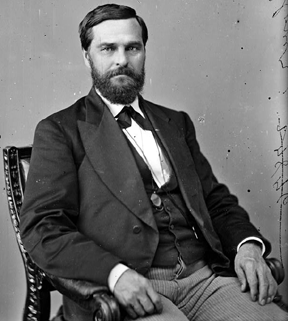
Rep. John Glover
Missouri

Representative John Glover of Missouri shows the common style of pairing light colored pants with a fine frock coat and low cut vest. Note his short hair and slicked down style paired with the neatly trimmed full beard that was so popular. His small bow tie with pointed short, pointed ends was the height of fashion.

Q&A About Men's Portrait Gallery 1870

Men in the 1870s wore a narrower silhouette compared to previous decades, with clothing characterized by elegance, sobriety, and practicality. Their standard attire included slimmer frock coats, cutaway coats, or sack coats paired with high-waisted trousers, waistcoats (vests), white shirts with separate collars and cuffs, neckwear such as bow ties or four-in-hand ties, and headwear like top hats or derby/bowler hats.

The 1870s fashion trends were marked by a narrowing silhouette and more understated elegance compared to the 1860s. Key trends included slim-fitting frock coats with narrow sleeves and lapels, the rise of the cutaway coat for business attire, the popularity of matching three-piece sack suits, higher necklines on coats, and the shift toward quieter, more somber colors and patterns, especially for formal occasions.

Upper class men in the 1870s wore high-quality, perfectly tailored garments made from premium fabrics. For formal daywear, they favored frock coats or morning coats in fine wool with silk facings, paired with matching or contrasting waistcoats sometimes in luxurious silks or brocades. Their evening wear consisted of impeccable black tailcoats with matching trousers featuring silk braiding. Upper class gentlemen accessorized with gold pocket watches, fine silk top hats, and could afford multiple outfits for different occasions, all adhering to the strict social dress codes of the Gilded Age.

Lower class men in the 1870s typically wore practical, durable clothing that prioritized function over fashion. Working-class men often had one basic outfit for everyday wear, consisting of sturdy trousers, simple shirts without attached collars, basic vests, and sack coats or older-style jackets that might be somewhat outdated. Their clothes were frequently patched and repaired, and the introduction of Levi's riveted denim work pants in 1873 provided a durable option for laborers. Caps or wide-brimmed felt hats were more common than the bowler or top hats worn by the middle and upper classes.

Historical Emporium offers well-crafted reproductions of 1870s men's clothing that balance historical accuracy with modern wearability. Their garments feature period-appropriate styles, cuts, and details while incorporating contemporary construction techniques for comfort and durability. The company provides a full line of men's period clothing suitable for movie and TV production, theatrical performances, living history events, and vintage-themed weddings, with individual pieces available to create authentic 1870s ensembles.

In the 1870s, men's fashion favored more somber, understated colors, with black reigning supreme for formal attire. Dark colors dominated coats and trousers, while vests occasionally featured more colorful silks and brocades for affluent men. For casual and country wear, tweeds in various earth tones, checks, and plaids were popular, and work clothes often came in practical darker colors that wouldn't show dirt easily.

Men in the 1870s wore several types of coats: slim-fitting frock coats for formal daywear; cutaway (morning) coats offering a stylish yet less formal alternative; shorter, less structured sack coats for informal occasions that often formed part of matching three-piece suits; and overcoats such as the Chesterfield, Inverness, and Ulster (often featuring capes) for outerwear. For at-home wear, smoking jackets were popular casual options.

Men's trousers in the 1870s featured a high waist with a straight, somewhat narrow leg compared to the baggier styles of the early 1860s. They were typically made from wool or linen and held up by suspenders as belt loops weren't yet common. Striped or checked patterns were popular for casual wear, while solid colors or subtle stripes were preferred for formal occasions. Notably, 1873 saw Levi Strauss and Jacob Davis introduce the original copper-riveted denim jean for durable workwear.

Men's shirts in the 1870s became increasingly plain, though stripes and plaids in blue, red, or gray on white were still seen. Shirts were made without attached collars or cuffs, which could be washed and starched separately. For neckwear, small soft bow ties were common, along with cravats, while the "four-in-hand" tie with its large knot and the ascot gained popularity as the decade progressed, available in solid colors, stripes, and polka dots.

While tall black top hats remained essential for formal daywear and evening occasions, they became less common for everyday wear in the 1870s. The derby/bowler hat became the fashionable choice for wearing with cutaway or sack suits, available in various heights and colors. Wide-brimmed hats with lower crowns in felt or straw were also popular options for casual and work wear.

Men's hairstyles in the 1870s became notably shorter compared to previous decades, often side-parted and slicked down rather than the longer curled sides and top of earlier years. Facial hair took center stage with a variety of popular styles including full mutton-chop whiskers, handlebar mustaches, full beards, and goatees, allowing men to express personal style while conforming to the groomed appearance expected of gentlemen.

For formal evening occasions in the 1870s, men wore black tailcoats, most often with matching waistcoats, white shirts featuring pleated or frilled chest insets, and dark silk bow ties. Matching trousers, frequently with braid on the side seams, completed the ensemble. A silk top hat, especially the Gibus collapsible opera top hat, was the standard headwear for evening events.

Cowboys and frontier men in the 1870s wore practical, durable clothing that often mixed various styles based on personal needs, availability, and function rather than following strict fashion trends. Their attire typically included sturdy work shirts, vests, durable trousers (including the newly introduced Levi's riveted denim jeans), wide-brimmed hats for sun protection, and hardy boots. While these men were aware of fashion trends, their clothing choices prioritized functionality for their demanding lifestyles.

The Gilded Age influenced men's fashion in the 1870s by bringing greater industrial production and economic growth that made quality clothing more accessible. With the completion of the transcontinental railroad in 1869, advancements in manufacturing, and standardized sizing, ready-to-wear garments became widely available through mail-order catalogs. This democratization of fashion allowed more men to afford complete wardrobes without requiring a tailor, while the era's focus on business success encouraged a more somber, professional appearance.

The pocket watch remained the essential accessory for men of all social classes in the 1870s, with its chain prominently displayed across the vest. When wearing single-breasted coats, many gentlemen would fasten only the top button to ensure their vest and watch chain remained visible. Walking sticks, gloves, and for those who could afford them, fine leather boots with spats were also popular accessories that completed a gentleman's ensemble.

The main difference between 1860s and 1870s men's fashion was the significant narrowing of the silhouette. The 1860s featured a boxy, oversized look with wide lapels, puffed sleeves, and wide-legged trousers, while 1870s fashion shifted to slim-fitting coats with narrow sleeves and lapels, higher necklines, and straighter, narrower trousers. Additionally, 1870s fashion was more subdued and practical, moving away from the colorful vests and large ties of the 1860s toward a more understated elegance.

Customer Reviews of our Store

Excellent Quality and Service

Sarah M.

October 15, 2025

I am absolutely thrilled with my purchase! The quality of the fabric and construction is outstanding. The attention to historical detail is impressive, and the customer service team was incredibly helpful with sizing questions.

Perfect for My Event

Rebecca L.

September 28, 2025

I ordered this outfit for a historical reenactment, and it exceeded all my expectations. The fit was perfect, and I received so many compliments. Will definitely be ordering from Historical Emporium again!

Authentic and Beautiful

Jennifer K.

September 10, 2025

The attention to detail in these garments is remarkable. The fabrics are high quality, and the construction is solid. I appreciate that they offer authentic historical clothing that actually fits modern women.

Great Customer Support

Emily R.

August 22, 2025

Had a question about my order and the customer service team responded quickly and professionally. The product arrived on time and was exactly as described. Highly recommend this company!